
Lately I’ve become a consumer of audio books. I’ve done this before, years ago, when I was working on getting a house ready for sale. Mind you, I’ve always read while cleaning or cooking, but it’s pretty hard to read while painting, hence the audio books.
The latest spree isn’t painting related (though it could be soon. I mean, all of this house needs painting, but I’m waiting for summer.) I’ve just taken up long walks, and audio books help.
It has also caused some strange shifts in my reading habits, as I’ve discovered that just like reading authors in Portuguese then in English isn’t the same. I don’t know if it’s extraordinary translators or simply ideas more suited to being expressed in one language than the other, but I loved some authors in Portuguese that I can’t read in English and vice-versa.
So, that’s the first:
1- not all my favorite authors translate well to audio books. Though so far I’ve found I’ve got a greater tolerance for books in audio than in reading. Some language issues that bother me in reading sound a lot more plausible in voice. I think that this is because hearing things spoken makes them somehow more real than reading them. Hearing is believing. (In this it might help to know I grew up with radio news, as opposed to TV news, so maybe I’m conditioned to consider spoken things “true” I guess.)
1a) I cannot listen to F. Paul Wilson’s Repairman Jack series, one of my absolutely favorite series, and one of the very few I buy in hardcover. Mind you, I can’t listen to horror, either, but I don’t read horror. Repairman Jack is a thriller with horrific elements. I can read it fine. In fact, when it comes out I usually read it in the evening/night. So why can’t I listen to it? I dream about it. In detail. Graphically.
There is a second find:
2 - I’m more likely to get subtexts in a book listening to it read.
Well, either that or I simply don’t function well while reading and washing dishes, and making sure the book doesn’t fall in the water. But Terry Pratchett, for instance, is infinitely “richer” in audio books.
Third:
3- I’m more likely to catch the voice of the book while listening to it audio. I mean, I’m more likely to start speaking and writing like that book. This means I CANNOT listen to Georgette Heyer while writing space opera. Otherwise, my space people will be going “Handsomely over the bricks, my dear. What can you possibly signify?” OTOH once I caught this mechanism, it makes it easier to stay on voice. I listen to the book with the closest “feel” to what I’m trying to write.
But the fourth and most awesome discovery is that I feel MUCH closer to the writer’s personality when I listen to books than when I read them. I can feel the person, there as it were. And the realization suddenly hits me:
4- I’m listening to the author tell a story. When these are the voices of a dead author – like Heinlein – or even an author who was much younger when he wrote something – like Pratchett’s early work – it feels like the narrator captured a moment in time and brought it to me, still alive an pulsing.
To my mind that’s a form of magic.
So, what are your experiences with audio books? (I don’t ask about movies, because we all know what they do.) Any fun anecdotes? (Oh, yeah, like the time the kids came in and I was – years ago. Got books from library, so had to go with what they had – painting and listening to a Nora Robert’s ahem scene. To this day they talk about me listening to porn.) HOW do you feel about audio books? Are they – to you – a legitimate translation of the story? Or do they feel somehow wrong, and like a completely different thing? And is it just me who reacts differently to the same book, read versus narrated?
Showing posts with label writing. Show all posts
Showing posts with label writing. Show all posts
Wednesday, April 6, 2011

Thursday, December 2, 2010
In Theory
In my other life (the one that's currently eating everything) I test software. The programmers who curse me daily often tell me they're done with whatever they're working for, and, in theory, this is true.
The problem with the strange and mystical land of Theory, is that it's not this world. In Theory, everything works to spec. Plans can be followed, and software is delivered for testing without weird glitches and weirder bugs (I should probably mention that I'm well known at work for finding the weird bugs that do catastrophic things to the system, but need the stars to be aligned and the moon in the correct phase and... well, you get the idea).
As writers, we run into problems with the land of Theory from two directions. Your nicely planned, outlined story changes its mind and twists, or worse, you write stories where everything works the way Character X planned it.
Readers of course immediately know that the latter situation can't ever happen, because every time something like that happens to them, they're looking around suspiciously, searching for the huge disaster that they just know is waiting for them. Because plans never go according to plan. It's a Rule. One of those ineffable ones, the ones writers always seem to end up effing because we just can't help ourselves.
As for stories twisting... Let's put it this way. The last time I tried to write romance, I got the piece with the working title of Evile Elves. Because they're not just evil, they're Eeeevile. The less said about my attempts at fanfic the better. I can't even manage standard epic fantasy. It's just as well I enjoy writing the stuff because editors take one look and start backing away while being very, very nice to the crazy lady.
The land of Theory. Wonderful place, that. Everything does what it should. What writing theories have you run into that don't place nice with reality?
Thursday, November 11, 2010
Why I write what I write

Those of you who've read pretty much anything of mine will know that it's got a dark streak roughly the width of the Pacific Ocean. You'd have also noticed certain themes appearing fairly often: individuality in contrast and opposition to group dynamics, the fate of the misfit, the lure of the darkness and the cost of resisting it, cheery things like that. Even my lighter pieces - including some of the shameless fluff - have that edge under them.
I don't write about these topics because I feel the need to tell people the right way to go/do/be. If I wanted to do that, I'd start a religion and preach. I'm drawn to these topics because - in a rather less extreme fashion - they shape a lot of my personality. Or because I find them an endlessly fascinating source of inspiration. Twilight (the abomination that is sparkly vampires excluded) is the place where the light fades and the darkness begins to rule. Uncertain boundaries like that tend to be where conflicts arise, and where what works in the light starts to get difficult, if not dangerous. That's good story-fodder.
There's a reason I don't write horror - if I did, I'd be the horror writer who sent people screaming into the darkness, leaving them too scared to sleep. That's something other people have told me, and knowing where my mind goes, I believe them.
Fantasy and Science Fiction are sufficiently open that I can let out the darkness in a "safe" way, show it for what it is, and maybe get the bloody nutcases who inhabit my imagination to stop bitching about me taking too long to write their stories. Hell, my mind permanently inhabits somewhere between SF and Fantasy, where just about anything is possible so long as you've set it up properly. Whether what emerges is SF, Fantasy, or in extreme cases Alternate History, just depends on the characters and the stories.
(This, incidentally, is also the reason my friends and co-workers are familiar with the phrase "Kate-weird")
Those of you who write, why do you write the things you choose to write? Those who don't, why do you read the things you choose?
Saturday, September 25, 2010
Do I Have to Write?
 Our guest blogger today is Ellie Ferguson. Ellie's novel, Wedding Bell Blues, is published by Naked Reader Press and is available from the N.R. site and Amazon. Let's give her a big welcome and make her feel at home. -- Amanda
**
Earlier this week, I did a blog over at The Naked Truth, Naked Reader's blog where I asked -- okay, I'll admit it. I whined a bit -- "Do I have to?". I whined because Amanda and Cliff, NR's acquisitions editor, wanted me to post a little about myself and Wedding Bell Blues. I'd never done a blog before and really wasn't sure what I ought to say. Next thing I knew, not only was I blogging there but here as well. I'm no longer whining, except when my coffee cup is empty and the chocolate is gone. But, from what I can tell, that's the general response of most writers face with such a predicament.
Okay, who am I and why am I here? As it says on the book cover -- gee, I never really thought I could say that. And isn't it a great cover? Laura Givens did a wonderful job and I can't thank her enough -- my name's Ellie Ferguson. As I said at The Naked Truth, I'm older than 20 and younger than death and that's all you'll get from me about my age. After all, it's not polite to ask a woman how old she is. I'm a mother, a daughter and was a wife. I've spent most of my life in the South and love to travel. The only problem with that is my dog always thinks I've abandoned him when I do and it takes weeks to reassure the poor thing and my cat resents the fact I came back before he could figure out a way to kill the dog and hide the body. My house is haunted -- it is, really. I swear it. What else explains the table that plays music and the light that comes on by itself? -- but it's mine and I love it. Okay, I'm a little strange. But that makes life interesting.
Wedding Bell Blues is my first published novel. Like most writers, I have a number of others that I probably should burn for fear that, after I'm gone, someone might find them and see that I spent a lot of time writing bad fanfic as I learned how to be a writer. And that brings me to the topic today.
Do I have to write? I can't tell you how many times I've heard that question -- and often from myself. Sometimes the question comes from family or friends who just don't understand what it is to be a writer. They shake their heads and you can see them thinking, "Poor Ellie. Her head's always in the clouds. Such a shame she can't be like the rest of the family." Then there is my favorite variation on it, "Poor Ellie, such a shame she'll never be as good as [insert author's name here]."
What they don't understand is that, yes, I do have to write. Writing is as much a part of me as my graying hair and need for coffee every morning. I can't not do it. The hard part is screwing up the confidence to actually send out something I've spent so much time writing. Then the wait. Will the editor like it? Will they buy it? What if they buy it but want me to make all sorts of changes? What if my father sees what I've written -- oh, wait, it's not THAT kind of book. Whew.
Then the call comes saying the editor liked the book and wants to publish it. My shout of joy can still be heard -- echoing somewhere around the Himalayas by now. That was one of the best moments of my life. Someone not only liked what I had written but wanted to pay me money for it and put it out where others could read it. Others...gulp...people would actually read it. Was there anything in it I didn't want them to read? What was in it? Why couldn't I remember what I'd written?
Fortunately, Cliff managed to talk me down from the sudden burst of fear that no one would like my book. Now I only break into the shakes once every couple of hours. After all, I'm an writer. I can say that now. I have a great cover with my name on it. I can point people to sites where they can buy my book. No need to hyperventilate. No time to...after all, I have to write. Not for Cliff. Not even for Naked Reader. No, I have to write for me. Writing is a part of me and I have more stories to tell. As I work on my next novel, there is only one question I can't answer and it is the question all writers -- if they're honest -- fear: will the readers like my book?
All I can say is I hope so. Wedding Bell Blues is one of those books that had to be written. It came to me while on vacation and wouldn't let me go. I had fun writing it and I love the characters. Hopefully, Cliff will let me play with them some more later. In the meantime, I'll continue to write because I can't not do it.
Hello, my name's Ellie and I'm a writer. It's almost 7 in the morning and I've written a blog and 1,000 words on my current wip. Who drank all my coffee?
So, how about you guys? Do you have to write? Or am I the only one who has the strange, often demanding, compulsion?
Sunday, September 12, 2010
How events shape our writing
I'm going to do my best to stay away from politics today, but bear with me if I wander a bit too close to the line. Yesterday was 9/11 and for so many Americans it brought up a myriad of emotions. I'm not going to write about who did what to whom -- we know what happened and we each have our own interpretations on cause and effect. What I do want to talk about is how traumatic events -- be they events that hit on a national level like 9/11 or Pearl Harbor or events that are purely personal -- affect our writing.
I don't know about you, but writing for me has always been as much therapeutic as it is creative. When I don't write for a long period of time, I feel it. It is that outlet for me in much the same way physical activity is. It is the one time I can be totally inside myself and let my thoughts and feelings come pouring out, whether it is in a journal entry or in writing a new book or short story.
But what really brought this home is a project I'm considering going back to. It's one of those toss it under the bed and let it mature or it will never see the light of day sort of projects. You know the ones I mean. It's that book or short story that insisted it be written but, once done, there is nothing you can do at that time to make it into something that can be sold.
Well, this novel is just that sort of thing. Not only is it waaaaaaay too long. We're talking goat-gagging length of almost 250k words. So massive editing needs to be done. Editing on the scale I couldn't have accomplished 2 years ago, much less 9 plus years ago. It is also a split-personality book. And that is where emotional reaction to a traumatic event comes in.
A little background. This book is a space opera. That's what it started out to be and that is what is remains -- even if it is a big, bloated space opera right now. Like a number of space operas, politics played a role in the plot. But it started out as being very much in the background, mentioned only to explain why a couple of things happened. Pre-9/11, it was a character-driven novel.
Then 9/11 happened and I suddenly understood the emotion I'd seen in my parents when they spoke of Pearl Harbor. The feeling of safety I'd known growing up, something the duck and cover drills in elementary school never took away from me. Sure, on an intellectual level I knew there was always the possibility of someone attacking us. You can't grow up during the Cold War and not have that drilled into you. But, you see, I never believed it would happen.
That belief was shattered on 9/11. While the images of the Twin Towers will always haunt me, the feeling I will always remember is that quick spark of fear, of breathless waiting as I stood in line outside the local blood bank that afternoon and talking with several American Airlines executives waiting along with so many others to donate blood. We'd been discussing how strange it was to see no planes in the air. None of us had realized until then how used we'd become, living as close to DFW airport as we did, to the constant sight of multiple planes overhead. Having an empty sky was unsettling.
Then a hush fell over the crowd -- and it was a crowd. At that time, there were approximately 100 of us standing in line waiting to give blood. All eyes had gone skyward and were fixed on a single aircraft flying much too low for comfort. No markings on the plane. All we knew was that it shouldn't be there and it was flying eastward, perhaps toward the airport or perhaps toward Dallas and its skyscrapers. Now, nothing happened and we learned later it was a federal agency plane doing a flyover. Still, that fear, that spark of anger at the thought the horror was about to visit close to home remained.
And it translated into the space opera. A third of the way through the book, it suddenly changed. Suddenly gone was the nice, almost light-hearted romp of approximately 100k words. In its place was a hard-hitting, political novel with too much of everything. But it was what I needed to help process and deal with what had happened that terrible day. And, because I didn't consider myself a "real" writer back then, I finished the novel and under the bed it went.
But it didn't disappear from my head. It stayed on that very back burner all these years, pushing forward from time to time, as if to see if I was ready to look at it again. Until recently, I wasn't. But this past week, those occasional pokes became persistent and I pulled it out. Somewhere in there, between the lame attempt at being light-hearted and the heavy-handed political response to 9/11, is a good book struggling to come out. I can feel it, if that makes sense. Now I have to put butt in chair and bring that book it can be out. That means reading the original and remembering all those emotions that were poured into it and then figuring out the best way to rewrite it. Most likely, it will be from scratch. That's okay. The original served its purpose -- or should I say purposes? -- in that it let me write the story and let me get out and process some of the emotions that ran so strongly through me 9 years ago.
So, do events, personal or national, influence your writing? How do you use your writing to help process or deal with these events? Or am I the only one this happens to?
Friday, August 27, 2010
The Legs of Passion
 I've been doing a little brainstorming lately thinking about the things that all contribute to my own passion for writing. Humans are complex organisms and there are many elements.
Not to say you could not break this down any way you choose, but these are the categories that I came up with. I broke it down into the six 'legs' of the writing table.
The first leg was love of story. Ideas really propel me, but it often takes a bit of inspiration to drive them: interesting non-fiction, good books, films, other weird ideas or what ifs. Character is another driver. I don't think most of the MGC writers need help to get their characters to come out to play, but often mine do get a stale kind of feel. To try and reconnect I often let myself go a little left of field and explore their backstory a little more extensively - it's amazing how often this helps to solve plot problems.
Putting more humour into your story or dialogue is another fun thing to do. Depending on your inclination, plotting out maps and drawing the street plans of cities, or painting characters and settings is also a good way to get enthused. Look for movies or books or art that inspire you for the piece you are writing.
My second leg was the excitement of a potential market. Where are you thinking of sending your work? What publishers are doing great things in your genre? I find having a potential market in mind - a deadline is even better! - to be really motivating. I love writing with some destination in mind, like a themed anthology for example. Hunt for books at the local bookshop or library. Find something that excites you then research the publisher. Think of this as a potential market.
The third leg was health and energy. Yes, we are human animals. Health is often neglected by writers, but has a huge impact energy levels. Sleep. Strangely most people need it. The quality of your food, the amount of rest you get. What do you do for stress reduction? That's important as well. How about exercise? Small amounts of low impact activity have been well demonstrated to have large positive effects. Walk the dog.
The fourth leg is support. Share your dreams with the people you love, reach out to other writers. Go out to crit groups even if its just for coffee and a bitch. Open as much communication as you can. Go to cons. Meet other writers. This is important, and also neglected, often by new writers. That's why the impact of your first convention as a writer can be overwhelming and a revelation at the same time.
The fifth leg is belief. Dream. Don't be afraid. Create your future in your mind. Look at your stories critically, examine their strengths and their weaknesses. When you send out your work, know it well enough to believe in it - if you know it well you will be able to immediately rebut unfair critique or review. Stay positive. One thing is for certain, if you don't have your work out there you will not publish.
And lastly, the sixth leg, celebrate! Many writers are perfectionists with impossibly high standards. When you do achieve a success milk it for all it's worth! Take the family out for dinner. Go to the cafe and have that piece of cake. Take 10mins and just look wistfully into space. Take the time to recharge. Have a break and rest - knowing that you have taken one more step on the path.
OK. Well there is my brain dump for this week:)
Have I forgotten any legs? Remember - leave off one leg and the writing table falls over! And I'm not coming over to clean up the mess!
Thursday, July 15, 2010
Nature in Fiction
 I love nature. When my head is swirling around there is nothing better than going for a walk. One of the nice things about Brisbane is that its quite green, with plenty of trees and flowering plants and larger sections of forest accessible to most suburbs. I live near Toohey Forest, a large area of native open eucalypt forest on Brisbane's south side. Being in contact with living things and seeing that beauty is a welcome tonic.
That expression of nature is something that I also love in fiction. Its probably no accident that many of my favourite fantasy books feature characters that live in remote locations, with plenty of treks through the forests and anxious chases between hunter and quarry through the mountains. David Gemmell's books often featured a loner hero, living in the cabin in the woods. The wild country was a real part of the setting with most of his books, and the Rigante series is a good example.
A lot of the books that I have read depict European or northern hemisphere ecology - oaks, elms and holly, deer and rabbits etc. I have always enjoyed this setting in fiction, but when it comes to writing I am often torn about what to portray.
In contemporary fantasy, I describe what I see around me - the Australian forests and animals - and their magical equivalents. However, when the setting is a completely constructed fantasy world, the choices become less clear cut. Describing the typical Australian natives in this sort of imagined world would probably lead to bafflement on the part of non-Oz readers and perhaps even a feeling of discomfort for some of the Oz readers as well. Fantasy readers love familiar settings (yes, different enough to get published, yet familiar all the same). Sometimes I have taken the middle road and tried to create my own plants and animals, but this soon gets exhausting, and if the background setting is not going to be a feature of the books (e.g. Michael Swanwick, Neal Asher etc), then it is annoying and distracting for the reader.
So how do you handle natural settings in your fiction? Do you think it is essential or just backdrop? Who do you think has done it well?
Thursday, July 1, 2010
Adding Color / Society for the Encouragement of Cruelty to Characters
 Reading some fantasy recently, I came across in insane character. He was only slightly insane - and he also knew he was insane. Not that I have never read insane characters before, just not for a while.
It made me realise that there is so much scope to add color to characterization. Joe Abercrombie did some interesting things in his series, particularly with his crippled Inquisitor-type character. In this case the extra dimension was the pain and physical impairment that the character had to continually deal with (JA also altered the prose between character sections to give them a distinct feel. Nicely done.).
We take it for granted in modern society that 'pain free' is normal. You don't need to go back more than one or two generations to find people who just carried on with chronic pain, toothache . . .whatever. My mother was like that. She would just shrug her shoulders and say 'It will work itself out, eventually.'
Yet despite this - and that fact that almost all fantasy is set in medieval/historical settings - pain and discomfort are rarely mentioned.
You don't want to go too far and overwhelm the reader with an in-your-face setting that is just too grim to enjoy, but little touches can go a long way to make characters distinct for the reader.
Outcasts and aliens - people on the outside of society are always fun as well. This immediately adds conflict, both internal and external.
This all just goes to prove how damn sadistic authors are. So far I have made my potential characters insane, then given them chronic pain and introduced them to Albert Camus. At least I haven't broken their hearts - yet. MuahahahahaHAHA!!
So what other interesting elements of characterization have you explored? How have you tortured your poor characters lately?
Friday, June 11, 2010
How Split Personality is a Good Thing
 It's amazing how often you discuss writing with people and come across the same quaint notions of what a writer is. (I'm not even going to touch the popular image where we are all filthy rich layabouts like the guy in Californication with agents who pander to our every whim.)
You hear things like:
"People say it's lonely being a writer. You spend your life alone."
Hmmn. Well I guess there is no physical person actually sitting beside you, but I'm sure most writers would agree its pretty crowded in that particular space. So many characters either trying to talk at once, or waiting their turn. Either way they and the universe you are trying to create are there with you.
Then, once the writing part is over and it's time to sell the manuscript, there is no such thing as simply wrapping the thing in brown paper, licking on the stamps, posting it off to some distant publishing house and waiting in the silent parlour for a reply. At least not anymore.
People talk about the writer living in the garret, working away in the bliss of artistic isolation. In this image the writer is uncomfortable with people, introverted to the point of dysfunction. Maybe they start that way.
All the successful writers I know are incredibly dynamic. They might be an introvert at heart, but they have all worked damn hard to become just about everything else as well. Effective networkers that can move through a crowd. Polished performers that rattle off anecdotes in a seemingly spontaneous manner, keeping a workshop or panel crowd entertained while simultaneously informing and promoting themselves and their work. Strategic thinkers who can plough their way through Internet sites and magazines and absorb a bird's-eye-view of the industry, much as any steel-trap minded lawyer or analyst might.
So who exactly is this author person? An artistic introvert at home in their own skin? A networker who delights in the company of others? A performer who feeds off the room? A cool-thinking analyst, capable of ruthlessly pursing their goals who would put Hannibal Barca to shame? Which one? All of them?
It's enough to put a psychologist into a mental hospital. How on earth can one person be all this?
Any clues? Have I missed out any additional split personalities?
Thursday, June 3, 2010
Hello And Thanks For The Fish
 With all the recent discussion about how grim things are in the publishing world and the uncertainty in the market with developing electronic formats, I thought it might be nice to say thanks.
Even though things are challenging, and governments do spend lots on vast sport stadiums, there are people in government at various levels who are working to support the arts. And publishers and editors who go beyond the call of duty for the sheer love of the written word.
I have plenty of writer friends who have received Federal and State government arts grants - either to travel to a conference, attend training or to support the completion of a particular project. I've always recognised this at a distance, and with a vague suspicion.
But earlier this week I attended the launch of the 2009 One Book Many Brisbanes anthology. This is a local Brisbane City Council (Brisbane is the capital of the state of Queensland) initiative that has been running for five years now. I was lucky enough to get a story in the 2009 anthology, and in the first OBMB anthology in 2005. This is how the BCC is supporting the development of local authors, and providing a way of recognising them.
I took the whole family to the launch - and the spread they provided put many a book launch to shame. My kids attacked like locusts and it was funny to see how many thrifty authors made the most of the free coffee, teas, cakes and savoury snacks.
The BCC is so behind this initiative that the Lord Mayor Campbell Newman came himself to launch the book and swan about with the local creative crop (our Lord Mayor has been short listed along with 25 others for the World's Best Mayor - bit of fun trivia).
Here is Campbell Newman, me and the kids (Sandra is taking the photo):

It was nice to actually feel like a valued author. At the time it really struck me how fantastic this whole program was - and how great that our local government was so committed to the development of creativity in Brisbane (BCC are looking to develop creativity across all areas -- science and technology as well).
This is the third time I have met Campbell Newman (one at the prior OBMB, the other at the launch of another Brisbane-based antho). He is a very personable fellow, and with our joint background in engineering (he was a Civil), we tend to gabble on quite easily.
My wife was highly amused to see us rabbiting on about the restoration of the old Brisbane town hall (as was his minder). See photo below:

So thanks BCC! You can read all the stories from the 2009 OBMB (Including Yours Truly's) on-line here:
So what other government programs have helped you? What publishers or editors have gone out of their way to give you a boost?
Wednesday, June 2, 2010
Revolution!
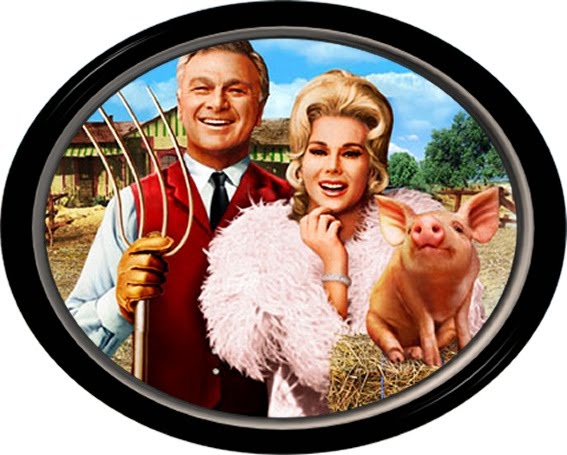
I know a little more about revolutions than normal people. My teen years were a festival of revolution and counter-revolution. To this day, I can’t hear the theme song to Green Acres without feeling unsettled and wondering who is in charge now. Green Acres? You say. Yes, indeed. You see, when the new revolution du jour took over the main television studios, the secondary – normally redistribution – studios in Porto were left to fend with what they had and avoid dead air. And what they had was ONE episode of Green Acres. So, before any announcement were made, we knew there had been a revolution and would sit around the TV, wondering what was going on and who it was who’d grabbed power this time.
(And before you decide to hum the theme song of Green Acres at me at cons, let me tell you it’s a very bad idea. So bad, in fact, my husband has stopped doing it. ‘Nough said.)
Meanwhile you’re wondering why I’m sitting here, telling you about my life. Well, I’ll explain. There is something leftover from this sort of thing. Something that longs for security – almost – at all costs and that dreads and hates unsettled futures. Something that had me in the car and buying a truckload of food an hour after the second plane hit the towers – because food in the pantry is security, you know? Something irrational and a bit feral. Something that makes me more than a little insane when I am out of contract for books, for instance. Something that perhaps hampers my career because the idea of going e-only or self-publishing anything makes me clench my hands on the seat like Athena in that flycar in Darkship Thieves.
Think of it as a psychological seismograph. I feel movements that will cause insecurity or turmoil long before most people do. And for the last five years, the publishing world has been driving me as insane as a cat on a hot tin roof.
I could feel the forces when no one else seemed to worry about them. Online buying; ebooks (I confess I expected these to take longer, mostly due to reader tech); self publishing made easy and perhaps profitable. I could feel the tremors no one else seemed to feel. I could see that bookstores were not stocking by and large what the reading public wanted. Oh, a segment of the reading public, sure. But readers are not theater goers (I don’t mean that literally. I know a lot of people read and go to movies. I’ve been known to.) There are no multitudes of them. You can’t do a “teen book” that appeals ONLY to teens and sell as much as a teen movie that appeals only to teens. Teen books, like Harry Potter, say, do best if they appeal from early readers onto elderly readers. Following the Hollywood model, where publishing – and especially distribution – pursued the new-new thing relentlessly was always part of it, but lately it had become obsessive. I could see that what I call the “name change dance” was turning readers off. (It was turning me off. It was no longer find a new author, make a friend for life. No. By the time I bought that book, my discovery was likely already unemployed or had changed names. Untraceable.)
Now the seismic shocks have become so obvious that everyone can feel them, except perhaps some publishing executives with hands over ears in the back room saying it's just the sound of running feet in the basement.
Is this good or bad? And what comes next?
Both and who knows? It will be good if publishing adapts, if publishers become brands, if they come up with creative models to shift their costs around so that it won’t matter if their print books aren’t selling and ebooks are. It could be very freeing, because readers could actually have a lot more control over what they get to read. And perhaps reading will become cool and hip and the profession of writing healthy again. It could be terrible if they don’t adapt quickly – remember most of them are giants – and fail, and nothing else grows fast enough to replace them. As readers we’ll end up having to wade through piles and piles of self-published slush to find a nugget of gold. And as writers... well... there will be no security at all.
Revolutions, after all, can be good or bad. (One of my after-effects is that I read about revolutions, compulsively.) Every revolution can be like the American revolution, the French, or even – shudder – the Russian. And the beginning is no guarantee of the end.
Right now, we’re in the middle of the revolution, and we can’t tell. Right now, we’re all sitting in front of the TV while that same episode of Green Acres plays again and again, and we’re wondering how it will all turn out and if we’ll be winners or enemies of the revolution. So we stay quiet, and we sit here, waiting, waiting. Sooner or later there will be an announcement. Will it be good for us? Or bad? Yeah, some of our colleagues are in the street, cheering on one or the other side, but they don’t know either, who’ll win out. They’re just betting their (professional) lives.
There’s a song by Chris De Bourgh I’m very fond of. http://www.youtube.com/watch?v=d0zp9uX9B6I (Indulge me, I was kissed for the first time to a Chris de Bourgh song.) Lately I’ve been listening to it a lot. Listen to the beginning “Wake up, boys, there’s a light at the window/I can hear someone knocking on the door/there are voices in the street and the sound of running feet/And they whisper the word revolution. ” and “Like a whisper in the wind/revolution.” And then: “Is anything changed at all/sweet liberty/sweet liberty is in our hands/it’s a part of the plan/or is it a state of mind/horses and men/horses and men are on the field/They didn’t yield/Many have fallen here/Never forget/Never forget what they have done/The time will come/When it will change again.”
There will be victims. There are in each revolution. Something will be lost that’s never found again. Other things will be gained that might not become obvious for years, perhaps for decades. Our own view on what changed and whether its for the best or not will change.
Right now, none of us can tell how it will turn out. We don’t have crystal balls. We can however get paranoid and scared and hurt ourselves and others. We can run our mouths and percipitate the fall of the regime, not knowing what will follow. Or we can support the regime and end up against the wall when the revolutionaries win. Either way, there's no safety anywhere.
I tell myself no revolution that brings me free books on the kindle, which has allowed me to discover countless new authors, can be all bad. I know in my heart it can’t be all good. I worry that we’ll become a splintered public, supporting so many niche authors that none of them can be a bestseller or even make a living. Yet I like getting what I want when I want. I like the fact that quite small niche authors can make a living on line. I like the choice. And yet Alvin Toffler's prosumer sounds like a lovely idea, until you realize that the prosumers have to live from something.
What do each of you think he or she will gain from the revolution? What do each of you think he/she will lose? What will the brave new world look like? An endless array of kiosks selling everything from sweet Amish Romances to Alien Porn? Exploding spaceships to pacifist, feminist literature? Or just by virtue of bigger bandwidth, an endless array of porn and true crime mags?
Sweet Liberty, Sweet Liberty is in our hands... It’s part of the plan.
Green Acres is the place to be/Farm living is the life for me..........
Thursday, May 27, 2010
Beyond the End (The Other Side)

What lies on the Other Side?
Does this question conjure up creepy images of the afterlife? The shadowy realms that border graveyards? OK, ignore me, its my horror frame of mind at the moment as I contemplate a Brisbane ghost story.
What I really had in mind was probably something equally horrific - well at least for me. And that is what lies on the Other Side of my last work in progress.
I usually conceive the story before I start. I might fill in gaps as I go, and everything certainly comes alive, but by the time I am steaming toward the end I am picking up some appreciable pace. By the time I write to the end (I'm talking first draft here, not all the other thousand times I rewrite it) I am sometimes so pumped that I can hardly sit in the chair. I guess I'm a finisher - which probably explains the trouble I have with beginnings. Or starting something.
Once I've finished a project, I have a pretty massive creative crash. Going from that level of immersion into a new project is tough for me. I know this is the absolute opposite of many others, but facing the first, blank page of a new world is like sitting on the floor after harakiri contemplating my entrails in a state of mortal agony. OK. Might be getting a little dramatic. I guess you probably realise I am there right now. Related to this is my problem of holding onto things way longer than I really should.
Don't get me wrong, starts are exciting as well. Its fun being able to leap conceptually in any number of directions and give birth to something completely new.
So how do you face The Other Side? The period of completion after your creative project? Do you jump for joy, light up a cigarette and crack a bottle of champagne? Do you crash mentally and emotionally? Do you breath a sigh of relief and reach excitedly for the parchment?
What is the Other Side like for you?
Friday, May 21, 2010
Who Are You Writing For?
 I came across a fantastic quote a few years ago - 'Write first for yourself and then for the rest of the world'. Another way to put this is 'Write first with the door open and then with the door closed'.
For me this means that for the first draft of the story, or the book, you should allow yourself to be free creatively - to flow with the story and write the story you want to see, with the characters that you want to write about. Here you don't have to worry so much about passives, or if the descriptions are all that crash hot, as long as you are experiencing the story. This gives you a narrative drive and a kind of freshness, even if it is raw.
Then, when you open the door up, you are opening it up to critique and feedback from your critique group, editor etc. Here you start to think about what a cold reader really takes away from that prose. The descriptions need to be crafted until they are good enough to evoke that same feeling that you experienced inside the reader. The passives, which were good enough to give you the inside feel of the action, have to be replaced with more direct storytelling - this is the old Show Don't Tell chestnut.
But beyond this, when you are just sitting there alone, either working on the first draft or beavering away on the nth draft of the Great Novel, do you have a sense that you are writing for someone? Is your sweat and toil being directed at a particular reader? Or is it a pure artistic sort of fugue, where you are communicating with some abstract part of the Universe?
Many writers are very deliberate about constructing their stories. They think about the target audience, even the the main gender they want to appeal to. They might study the stats describing the book-buying public with meticulous care and try and be crafty about what they scribe. Mmmn . . . that's definitely not me. But maybe these strategic writers actually have a sort of person in mind throughout the process of their work. I'm not sure.
Who are you writing for?
Sunday, May 16, 2010
Family Secrets
 First of all, a big thanks to Pam Uphoff for being our guest blogger yesterday. Great post, Pam, and it started me thinking. One of my "escapes" when I can't focus on the writing or -- groan -- when I have hit that point in editing when I know if I have to read one more word of this book I wrote months ago, I'm going to go screaming into the night, is to do a quick on-line genealogy hunt for my ancestors. Sounds simple, right? After all, in this day and age of computers and the internet, you can find just about anything.
Well, the problem is, as I search, I discover I come from a family of liars. Or at least the champions of stretching the truth. Growing up, I was told my great-grandfather left Pennsylvania for Colorado because he was Amish and had a great singing voice and he had to get away so he could sing. Well, no. That wasn't it at all. My great-grandfather was a newspaper man. He went to Colorado and opened his own paper and ran it for years before moving to Kansas and doing the same there. My great uncle, his eldest son, was the youngest linotype operator in the country at the time -- not the dashing World War I spy we'd always been told. But his brother, the "responsible" member of the family, was a businessman, head of the chamber of commerce, etc. What wasn't talked about was his secret. It's a very deep and dark secret and one I may be tossed out of the family for revealing.
I don't know if I dare say it -- My Uncle Herb was -- horror of horrors -- a writer.
Which brings me back to this past weekend. Uncle Herb's daughter and granddaughter were here visiting from Kansas. Clarice, Herb's daughter, is the family genealogist. We were talking and I got curious and did a quick search on the internet and discovered that the family secret is no longer, well, secret. It's there for the world to see if it looks. Listed in the Catalog of Copyright Entries by the Library of Congress are two entries for plays written by "Port Weatherly" and the revelation that Port is -- gasp -- Uncle Herb. It says so right there.
Oh the shame, the horror...the family secret is out. It was bad enough we had journalists in the family. But at least they ran the paper and edited the content. They didn't actually WRITE it. Well, they did, but it was so long ago we can forget it. Besides, those papers aren't really online so people can find them. But this is listed in OFFICIAL GOVERNMENT DOCUMENTS. What to do, what to do?
I wish I could say I was being completely facetious about this, but I'm not. Like many writers, many of my family simply don't understand the need we have to write. They don't understand that writing is something more than a hobby. It is a job and, for some of us, a need. If we don't write, we go a bit crazy because it is our outlet for frustration, fears, anger, etc. I'm one of the lucky ones -- sort of. My son knows about my writing and is in full support of it. My mother, on the other hand, is different. We have sort of a "don't ask, don't tell" understanding. She tries to act supportive, but the disapproval and the lack of understanding is there. So long ago we reached the unspoken agreement of just not talking about it.
What about the rest of you? Does writing seem to run in your family? Does your family support you as a writer or not? Do you talk to your family about writing? Curious minds want to know.
Thursday, May 13, 2010
Spring Cleaning For The Mind
 Observing my own increasing trend for writing anywhere but actually in my home office - on the bus, in the park, in the cafe (bad for caffeine consumption!), I started to wonder if there might be something going on.
It could not possibly be the stacks of old Locus, Australian Author and Queensland Writer's Centre magazines, or the teetering piles of books - both read and unread. Nor the archive boxes stuffed with odd assortments, the piles of mouldering manila folders or the half of the office that has its floor area taken up with carefully deposited critique responses (patiently waiting for their turn), some of which may require carbon dating. I mean there is plenty of room to move the chair back - I hardly even even to squeeze through to sit at the desk.
Well . . . OK. The message finally started to sink in that five years is definitely long enough between spring cleans. So began the painful, painful process of trying to sort through all this gumph. Thankfully I managed to pull off a small miracle and use some storage area in a void under the house. But half a ton of paper had to be tossed (don't worry I recycled it).
After a long weekend spent tidying, sorting and dusting, I managed to reduce my office to something approaching minimalist. I could not believe the difference it made. I actually like being in the place now!
It made me realise that over time a kind of psychic detritus can accumulate along with all this garbage. You see all that crap, and somehow it gets bound up with all the negative feelings you accumulate toward your craft (well at least for me). It did me a lot of good to blow away the cobwebs. Physically dealing with this environment helped to clear the mental slate tremendously.
So how do you arrange your work environment? How do you keep the psychic cobwebs from accumulating, or do you keep the poor underpaid cafe workers in a job?
Thursday, May 6, 2010
The Art of Ice-Breaking
 Recently I have been really battling life. I always manage to get some writing in there somewhere, but it starts to tell. At the moment it seems to be on the bus, at lunch times, squeezed in before work - you get the idea.
One of the biggest problems is breaking the ice - getting motivated and creative in two seconds flat to make the most of the fifteen or twenty minutes that I might have.
Ideally (when life co-operates) I like to write in 2 hour blocks. I find this gives me time to warm up, tune in and really get into some sort of flow. At the moment this is impossible.
The thing is you might be able to 'write' for two hours in a day - say half an hour on the bus each way (that's one hour), then another hour at lunch perhaps (in the cafe' or park). This adds up to 2 hours, but if it takes me ten minutes to reconnect and establish some sort of flow then its really only an hour and half! That's not counting the time taken to grit my teeth and drown out the two idiots at the back of bus talking much too loudly and giving their opinions on everything I really don't want to know about.
So how do you write? In snippets? In large blocks? In the emergency stairwell (yes it's been done)? If you do write in small parcels, how do you manage to reconnect with your work and get back into the flow?
Friday, March 5, 2010
Hooking the Reader
 After all the recent discussion about openings, I've been grappling with the challenge of hooking the reader. Its always important, but I guess its been coming a little closer to home for me as I try to resurrect various short stories and get them onto the market, and look at writing new ones (hey Sarah, five on the market now!).
With short stories you have even less room to hook a reader -- one or two lines at the most. For a novel you might get half a page.
I don't think there is any magic formula.
Thinking about it, I could identify a few different tacks you can take:
- You can hook into character. Try to present something unique in the character, and hook into their personal dilemma somehow.
- Present a mystery. Something bizarre and/or intriguing enough to get the reader interested.
- Dangle a trope. Some writers are excellent at this. I recently read a Kelly Link story that hooked me in extremely well. I'd read the whole thing before I realised nothing happened. The unspoken promise (of finding the Faery Handbag) was not delivered.
- Go for the oddness factor. Present something that is so quirky and bizarre -- some sort of mental disconnect that is intriguing - that the reader is drawn in just to find out what the heck is going on.
- Or go for combinations
Now, some writers don't think endings are all that crucial in a short. Me, no matter how long they are (or short) I like to see them going somewhere -- or at least delivering on the initial promise. So I guess there is a word of warning there. That Kelly Link story was the first in an anthology. I did not read any more stories, having been fundamentally disappointed in the first. But that is just me. Others have raved about that same story and its magical quality.
So what other hooks can you think of? Or other ways of looking at hooking the reader?
Thursday, February 18, 2010
Cheat Post - Beginnings
 Yes, that really is a picture of me (without the mustache).
I'm cheating today, and following on from Kate's post, which certainly hit the mark at the moment. I am in the middle of trying to resurrect a few short stories that have not been sent out in an embarrassingly long time, and yes - you guessed it - struggling to put together first paragraphs that actually manage to snatch someone's attention.
This is part of my all out effort to get all my stories onto the market (thanks to Sarah's pointy shoes). I actually have four out there (and written two new ones!), but have three more to go.
I don't have any intro scenes featuring changes in the weather, but I do have someone narrowly dodging a bucket full of nano-bacteria (does that count, Sarah?).
Recent intro paragraph suggestions include:
- Sex scenes
- Protagonists being attacked on awakening by Freudian monster
- Protagonists being attacked in the shower (Freudian monster optional)
- Character killing someone (reluctantly)
- Kinky mud-wrestling.
So what really grabs you as an opening of a short story?
Thursday, February 11, 2010
Use of Theme
 Quiet a few years ago, as a critique circle newbie, the group I was with would set deliberate exercises to help us focus on various writing craft elements. It might be point-of-view, writing in various tenses etc.
One month someone proposed themes – i.e. looking at and articulating the theme of our current work in progress.
I can remember thinking at the time ‘Theme? Huh?’
I had never consciously put a theme into what I wrote, and expressed my puzzlement to the group. Someone immediately responded ‘You do though! You always have quite strong themes coming out in your stories.’ After having thought about it a little while longer, I realized they were right. I did actually have themes in my work (it felt kind of like looking at those 3D pictures hidden inside another photo - it leapt out at me when I looked for it), but these were emerging almost unconsciously through the struggles of my characters and the way I had constructed the plot. Yet it was all instinctual.
I do spend time thinking about what is the core essence of a book – essentially ‘what the book is about’ – but really in terms of the characters and their journeys. I don’t use a theme or series of themes as a deliberate cornerstone for my work.
I know that some writers do have themes or issues that they feel strongly about, even to the extent that this may be one of the key reasons they are driven to write in the first place. In this case, the theme, and consideration of how to express this, forms an essential part of their initial creative process and a central anchor to their whole project – something that they may return to again and again to see if they are ‘on course’.
Do you try to bring out a deliberate theme in your work, or is it something you just let happen? Do you think the consideration of a theme is essential to writing fiction?
Thursday, January 21, 2010
Split Personalities
 It seems that being a writer requires that you split yourself into all these multiple personalities, most of which have opposite characteristics.
You need to be introspective, happy with your own company (and happy being in your own head) most of the time. How else would you do the necessary hours to get the output you need or increase your skills? This is essential for what is elegantly called the ‘bums on seats’ factor.
Yet at the same time you need to be an extrovert that thrives on personal interactions – getting out to conventions, networking effortlessly, confident at public speaking – enabling you to find those leads you need, and convince key people that you really do have something to sell, and to differentiate yourself from all the other writers that are only names on a submission.
When it comes to your own work, you have to be passionate and sensitive. You have to be so secure that you can let yourself free, let your creative energies boil in whatever direction you want.
Yet at the same time, you need to be able to approach feedback and critique on your work with a professional emotional distance that enables you to be ruthless, otherwise you will never be able to ‘kill all your babies’.
Its like those personality wheels – where the average person has ‘dips’ in some areas and ‘peaks’ in others. Well it seems the writer needs to be a superhuman self-developer, taking all those dips and pushing them up into peaks.
So - how do you handle all these split personalities? Do you get them to take it in turns? Did you have to turn yourself inside out to develop all these? Or did you have all these split personalities to begin with?
Subscribe to:
Posts (Atom)

 Posts

