
The best of times, the worst of times...
There have been some fairly gloomy posts lately which may lead some of you to conclude we're a sour, miserable bunch of old bastiches.
Heh.
There are times when that is true for everyone, and real life intrudes onto the lives of authors too, believe it or not.
There is no getting away from it... we're in turbulent times. There is also no getting away from the fact that it's been steadily getting tougher and less likely that a book will win through just by being a great book that appeals to a lot of readers. The intermediates have gradually done away with pure reader selection, they've gobbled up the margins meaning book buyers pay more, and writers actually get even less. It's been getting harder and harder to get in and then harder to make a living as the bestseller budget gobbled most of the cash (which was very nice if you happened to chosen to be a ‘bestseller' and be pushed but sucked if you were the rest of us... And it didn't do the market any good either.)
On the other hand, this may be the best of times to arrive on the scene. Turbulence is a sign and time of changes. The last 10 years were the worst of times to get into writing... but that's pushed the equation toward where change simply has to happen (it will be argued by the various Uncle Tom's of the status quo, that more more books are being sold now, than hitherto. This gentlefolk is what is meant by lies, damned lies and statistics... 1) it has become easier to do very small press. You can even do it yourself. If you discount titles selling under 1000 copies you will I think discover that the drop in the number of titles is steady. If you discount titles selling under 40K - as the one time noob fiction genre paperback starting point... you will find that actually the drop has been precipitous. 2)It is convenient to these folk not to separate fiction out. Wonder why? 3)The only accurate way of assessing the health of the fiction industry would be proportionate. If in 1930 50% of the English speaking population could read and 50% possibly afford a book and the uptake was 25%... and 2010 90% of the now very very much larger English speaking population could read, 90% possibly afford a book and the uptake was 10%... Your final number of book sales might be larger.... but you have lost a vast amount of ground. And we have.)
So things are at a point where they have to start breaking. Yep, publishing as we know it will still be around maybe even for another ten years. Some companies much longer... but the world of books will be a very different place (for the better, we hope).
And then we added the internet and e-books (the two go hand-in-hand). Which wasn't just the last straw... it was enough to be a paradyme change on its own. As Kate wrote, the internet was alone enough to start the death of intermediates - with Amazon (and others) helping to speed/cause the collapse of the over 500 distributors (I think we're down to 4 ) which exacerbated the problems above and made life very hard for smaller publishers, and indies and sheltered big publishers and big box bookstores so they didn't have to start adapting. The other big effect is to reduce the value of ‘retail access' which, from a very long list that publishers in 1920 offered authors was one of the few things not eroded by technology and outsourcing. And then to this you added the e-book.
Now, in the realm of hard to pin-down figures... this one is very elusive. Charlie Stross on a list I belong to said that figure is supposed to be under 2% - although doubling every year. Another spot talked about 10%. And Sony reckons it'll be 50% in five years. Believe who ever you choose - the undenyable fact is the change is coming rapidly, and will have some substantial effect on....
Not the hardbacks they're trying to price them as...
But paperbacks.
Despite the price differential, hardbacks were really a bit of vanity once. Because cheap paperbacks outsold them a myriad times. Paperbacks and poplarity go together.
So where does this leave us? Remember I said this was the best and worst of times. It leaves us with a fighting chance to adapt and get with the new paradyme pretty quickly and cleverly. Which, may not seem such a bargain - no certainty, no safety. But hell, the way the status quo was going, it was getting harder and harder for new talent to emerge, and harder and harder for anyone but the chosen few to survive. The historical meritocracy of writing still existed but it was definitely getting tougher for the few to make their way up. It happened, though rarely without intervention. That was bad for everyone... except the people running the status quo and the chosen few. Now, for a while anyway, there is a chance in the shake-out to get a foothold. Carpe diem ( A carp a day, nothing like it).
There will be a bunch of new start-ups. There are going to a bunch of failures. Some of the major stakeholders now are like that chappie from penny-go-in are going to desperately fight the tide. Others, like Baen and Amazon will try and run in front of it and shape it and work with it. Some publishers will survive and thrive. Lots won't. The model is changing and we need to make sure it changes in a good way readers and writers and so that middlemen go back to serving both as as the best way to to well (instead of screwing both for their short term benefit).
This is a good time to be here. Some time back Charlie Stross was once again holding forth about what you needed to do to promote your books on the subject of blogging -- and someone asked the question - if bOing bOing started up today, in the sea of blogs... would it have succeeded? Maybe. But it would have been a lot harder work.
So: What do you see coming? And how do we best ride out the turbulence?
I see all sort of exciting new things. Changes in length is a biggy for me. How long will e-books be? And would you advance buy a series? (Not advance pay, but book a copy)
Monday, June 7, 2010

Sunday, June 6, 2010
"It's the end of the world as we know it...."
 Okay, now you guys can have that song running through your head. And, no, I haven't lost my mind, nor have I joined the sack cloth wearing, sign carrying doomsayers. It's just that that particular line from the REM song seemed appropriate for this week. Maybe I'd better explain.
On the non-publishing side of my life, I went to the theatre this week. One of the great things about living in the Dallas area is we have wonderful live theatre venues. One of the newest is the AT&T Performing Arts Center in downtown. Across from the Dallas Museum of Art, it is the latest entry into the new arts district. Architecturally, it is a beautiful theatre, even if the lobby area is a bit too modern for my taste. Inside, comfortable seats, lots of leg room and a wonderful sound system.
So far, so good, right. The world isn't ending. And then the show began and I knew that, at the least, I'd fallen through the cracks into some parallel universe. Why, you ask. Well, if you've never seen Avenue Q, do. It's a wonderful snapshot of life, the good and the bad. But, it will also change the way you view muppets forever. Seriously. No joke here. The characters, including Kate Monster (no, Kate, she didn't have an Aussie accent of any sort, sorry), Trekkie Monster, Princeton, Rod and Nicky and others sing about things like "My life sucks". "the internet is for porn" and others. And then there's the sex -- muppet sex. Muppet sex!!!! Maybe it is the end of the world as we know it. (Yes, my tongue is firmly planted in my cheek, but there is muppet sex in the musical)
So, with that already running through my head, I booted up my computer and find a New York Times op-ed piece by Garrison Keillor proclaiming, "The End of an Era in Publishing". Maybe the muppet sex did it and it has caused the end of the world as we know it. But no, Keillor is simply pronouncing that "that book publishing is about to slide into the sea." Yes, more doom and gloom because writers no longer have to sit in their ill-lit garrets, pounding away at their typewriters and waiting and angsting to hear some publisher wants to offer them lots of money to publish their book.
Now, while some of my posts may seem depressing when it comes to the state of publishing, I don't mean them to. I think, like many others, that the industry is changing and we have to change with it. And by "we" I mean not only writers, but editors, copy editors and publishers alike. We have to respond to the demands and needs of the buying public. And I'm not alone in this. Keillor's op-ed piece generated some very interesting responses.
One of my favorites is from Richard Nash who said, "Culture doesn’t need publishing. Culture needs writers and readers connecting with one another. Publishing’s alleged demise is a problem only to the extent that publishing was doing a good job connecting writers and readers. But recent and current publishing was mostly in the bookstore supply business, only tangentially the writer-reader connection business. If the demise of the bookstore supply business pushes more talented editors, curators, and taste-matchers into the reader-writer connection business, our culture will be vastly improved by the demise of publishing as we had known it."
Now, I don't think we will see the demise of the bookstore nor of hard copy publishing. Much as I love my Kindle, I still love the feel of a "real" book in my hands. Also, there are times and places where I don't want my Kindle -- usually involving things like water. I'm a klutz and don't want to risk dunking the kindle in the bath, at the pool, wherever.

So, what are your thoughts. Is it the end of the world as we know it? Is Garrison Keillor right about the industry or do those who responded have a better grasp of the current situation? Is muppet sex on stage the reason for all this upheaval? Inquiring minds want to know.
As a footnote, the story round begun yesterday will stay open all week and next weekend I'll pull it all together and post it. So have fun with that as well, guys.
Saturday, June 5, 2010
It Started With the Cat. . . .
 Good morning, kind readers. Your mission, should you choose to accept it, is to take the following paragraph and add to it. One paragraph per comment. The rules are simple. Keep it appropriate for all ages. No politics, religion or other controversial topics unless they are central to the plot. Your paragraph must relate to the paragraph before it. The characters are yours. The story is yours. When the day draws to an end, we'll finish it up and post it as a complete story...hopefully. ;-p
The key today is to have fun. The mad ones who blog here will pop in from time to time to add their bits and pieces. It will be a good break from copy edits, exploding space ships, flying dragons and who knows what else that is tying them to their computers today -- Amanda
It started with the cat. Well, kitten really. A sweet, fluffy little ball of yellow and white fur. Who could have turned away from the forlorn look or the unmistakable disdain for Mother Nature being so foolish as to rain on the fur ball? Besides, the one blue eye and one green eye seemed to captivate me. Little did I know that rainy evening in June that my life would never be the same. Well, how could it be when that's the night the world ended.
Next....
Thursday, June 3, 2010
Hello And Thanks For The Fish
 With all the recent discussion about how grim things are in the publishing world and the uncertainty in the market with developing electronic formats, I thought it might be nice to say thanks.
Even though things are challenging, and governments do spend lots on vast sport stadiums, there are people in government at various levels who are working to support the arts. And publishers and editors who go beyond the call of duty for the sheer love of the written word.
I have plenty of writer friends who have received Federal and State government arts grants - either to travel to a conference, attend training or to support the completion of a particular project. I've always recognised this at a distance, and with a vague suspicion.
But earlier this week I attended the launch of the 2009 One Book Many Brisbanes anthology. This is a local Brisbane City Council (Brisbane is the capital of the state of Queensland) initiative that has been running for five years now. I was lucky enough to get a story in the 2009 anthology, and in the first OBMB anthology in 2005. This is how the BCC is supporting the development of local authors, and providing a way of recognising them.
I took the whole family to the launch - and the spread they provided put many a book launch to shame. My kids attacked like locusts and it was funny to see how many thrifty authors made the most of the free coffee, teas, cakes and savoury snacks.
The BCC is so behind this initiative that the Lord Mayor Campbell Newman came himself to launch the book and swan about with the local creative crop (our Lord Mayor has been short listed along with 25 others for the World's Best Mayor - bit of fun trivia).
Here is Campbell Newman, me and the kids (Sandra is taking the photo):

It was nice to actually feel like a valued author. At the time it really struck me how fantastic this whole program was - and how great that our local government was so committed to the development of creativity in Brisbane (BCC are looking to develop creativity across all areas -- science and technology as well).
This is the third time I have met Campbell Newman (one at the prior OBMB, the other at the launch of another Brisbane-based antho). He is a very personable fellow, and with our joint background in engineering (he was a Civil), we tend to gabble on quite easily.
My wife was highly amused to see us rabbiting on about the restoration of the old Brisbane town hall (as was his minder). See photo below:

So thanks BCC! You can read all the stories from the 2009 OBMB (Including Yours Truly's) on-line here:
So what other government programs have helped you? What publishers or editors have gone out of their way to give you a boost?
The future present
Sarah's comment about ebooks being introduced as a concept before the technology was really ready reminded me of something from my info tech degree, Lo! these many years ago (right around 2000, actually).
Disintermediation.
Okay, that's a mouthful, and one of the uglier words ever coined. But what it means is providing a service that eliminates as many layers of middleman as possible between the provider and the customer. eBay is probably the original example, with CraigsList following not far behind. These are places where people who want to sell stuff can list it for a relatively small price, with contact info and payment details, and people who want to buy stuff can find it and buy direct from the provider - who is, in the case of eBay, also providing the payment handling.
It was going to be the Next Big Thing, but ultimately it was, like ebooks, an idea that was ahead of its time.
I think that time is now, at least for ebooks and disintermediation.
The publisher started life as the only middleman. They'd arrange the assorted complexities (which are a whole lot less complex now than they used to be), and ship the finished product to bookstores or they had their own direct mail order. Then distributors moved in, because it was easier to box up large quantities and let someone else sort them out. The chain bookstores put another layer in, with buyers who knew nothing and cared less about the readers in any given area. The whole edifice is so clunky it's falling on its face.
Amazon was the first crack in the wall. Suddenly instead of having to rely on whatever your local bookstores held, if you had Internet access, you could buy anything in print, and get it shipped damn near anywhere in the world. Chain bookstores haven't adjusted to that one - and may never adjust.
DRM and all, the ebook readers are the next big break. Now, there's a device that can carry thousands of books, and doesn't cause eye strain. Sure, you want to have it inside a ziplock baggie if you're reading in the bath (this is something I don't do, because the water goes cold while I finish the book. It's the same reason I do not keep reading material in the bathroom. It's kind of disconcerting to stand up and have the seat stick to your butt), but on the whole it's nearly as convenient as a paper book.
What's actually happening here is that the pace of change is such that an age difference as small as five years becomes a massive cultural gulf - but the people who think they're in charge are trying to hold back the flood and failing miserably.
Just as an example: I predate color TV. My brother - ten years younger than me - has never seen a house without a microwave, or at least, not one he can remember. Someone born ten years after him would have grown up with CDs and personal computers. Five years after that, and Internet access is the norm, and CD burners are common. Another five years, it's broadband everywhere, DVDs and DVD burners. Five years on, smart phones are the norm. (I, Luddite that I am, have a relatively dumb cell phone. When my ancient, much loved PDA eventually dies, I'll get a smart phone and combine the functions.)
eBook readers will probably be normal for babies born sometime in the next 5 years - you buy them a reader, and all their school books live on it. It should - assuming that someone manages to step into the yawning chasm that is the disconnect between authors and readers (the entire publishing system is somewhere at the bottom of the gaping hole, at least physically. Mentally, I think most of them are somewhere near De Nial.) - be the norm to have electronic books which are not DRM and are provided by publishers whose websites include goodies like "fillable" texts - this tech is already partly out there in Adobe's fillable forms - where students can answer worksheets in the book, have them marked by their teacher via a networked system, and the entire history of the the lesson and the student's attempts to answer are there.
All it takes is someone to step up and provide a reliable source of non-DRM eBooks. And someone else with marketing skills I haven't got to promote the living shit out of it - if the service does what people want and they can find it, they'll use it.
Disintermediation.
Okay, that's a mouthful, and one of the uglier words ever coined. But what it means is providing a service that eliminates as many layers of middleman as possible between the provider and the customer. eBay is probably the original example, with CraigsList following not far behind. These are places where people who want to sell stuff can list it for a relatively small price, with contact info and payment details, and people who want to buy stuff can find it and buy direct from the provider - who is, in the case of eBay, also providing the payment handling.
It was going to be the Next Big Thing, but ultimately it was, like ebooks, an idea that was ahead of its time.
I think that time is now, at least for ebooks and disintermediation.
The publisher started life as the only middleman. They'd arrange the assorted complexities (which are a whole lot less complex now than they used to be), and ship the finished product to bookstores or they had their own direct mail order. Then distributors moved in, because it was easier to box up large quantities and let someone else sort them out. The chain bookstores put another layer in, with buyers who knew nothing and cared less about the readers in any given area. The whole edifice is so clunky it's falling on its face.
Amazon was the first crack in the wall. Suddenly instead of having to rely on whatever your local bookstores held, if you had Internet access, you could buy anything in print, and get it shipped damn near anywhere in the world. Chain bookstores haven't adjusted to that one - and may never adjust.
DRM and all, the ebook readers are the next big break. Now, there's a device that can carry thousands of books, and doesn't cause eye strain. Sure, you want to have it inside a ziplock baggie if you're reading in the bath (this is something I don't do, because the water goes cold while I finish the book. It's the same reason I do not keep reading material in the bathroom. It's kind of disconcerting to stand up and have the seat stick to your butt), but on the whole it's nearly as convenient as a paper book.
What's actually happening here is that the pace of change is such that an age difference as small as five years becomes a massive cultural gulf - but the people who think they're in charge are trying to hold back the flood and failing miserably.
Just as an example: I predate color TV. My brother - ten years younger than me - has never seen a house without a microwave, or at least, not one he can remember. Someone born ten years after him would have grown up with CDs and personal computers. Five years after that, and Internet access is the norm, and CD burners are common. Another five years, it's broadband everywhere, DVDs and DVD burners. Five years on, smart phones are the norm. (I, Luddite that I am, have a relatively dumb cell phone. When my ancient, much loved PDA eventually dies, I'll get a smart phone and combine the functions.)
eBook readers will probably be normal for babies born sometime in the next 5 years - you buy them a reader, and all their school books live on it. It should - assuming that someone manages to step into the yawning chasm that is the disconnect between authors and readers (the entire publishing system is somewhere at the bottom of the gaping hole, at least physically. Mentally, I think most of them are somewhere near De Nial.) - be the norm to have electronic books which are not DRM and are provided by publishers whose websites include goodies like "fillable" texts - this tech is already partly out there in Adobe's fillable forms - where students can answer worksheets in the book, have them marked by their teacher via a networked system, and the entire history of the the lesson and the student's attempts to answer are there.
All it takes is someone to step up and provide a reliable source of non-DRM eBooks. And someone else with marketing skills I haven't got to promote the living shit out of it - if the service does what people want and they can find it, they'll use it.
Wednesday, June 2, 2010
Revolution!
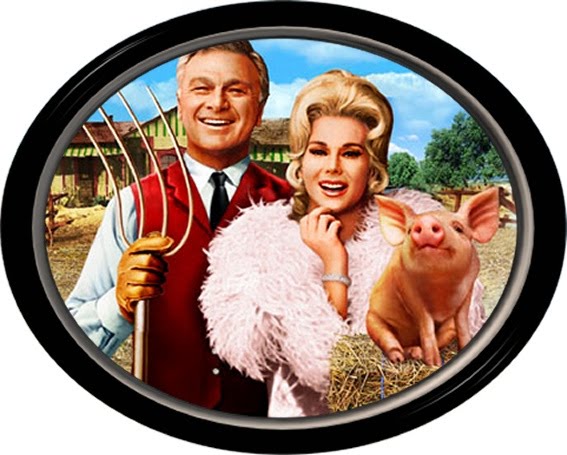
I know a little more about revolutions than normal people. My teen years were a festival of revolution and counter-revolution. To this day, I can’t hear the theme song to Green Acres without feeling unsettled and wondering who is in charge now. Green Acres? You say. Yes, indeed. You see, when the new revolution du jour took over the main television studios, the secondary – normally redistribution – studios in Porto were left to fend with what they had and avoid dead air. And what they had was ONE episode of Green Acres. So, before any announcement were made, we knew there had been a revolution and would sit around the TV, wondering what was going on and who it was who’d grabbed power this time.
(And before you decide to hum the theme song of Green Acres at me at cons, let me tell you it’s a very bad idea. So bad, in fact, my husband has stopped doing it. ‘Nough said.)
Meanwhile you’re wondering why I’m sitting here, telling you about my life. Well, I’ll explain. There is something leftover from this sort of thing. Something that longs for security – almost – at all costs and that dreads and hates unsettled futures. Something that had me in the car and buying a truckload of food an hour after the second plane hit the towers – because food in the pantry is security, you know? Something irrational and a bit feral. Something that makes me more than a little insane when I am out of contract for books, for instance. Something that perhaps hampers my career because the idea of going e-only or self-publishing anything makes me clench my hands on the seat like Athena in that flycar in Darkship Thieves.
Think of it as a psychological seismograph. I feel movements that will cause insecurity or turmoil long before most people do. And for the last five years, the publishing world has been driving me as insane as a cat on a hot tin roof.
I could feel the forces when no one else seemed to worry about them. Online buying; ebooks (I confess I expected these to take longer, mostly due to reader tech); self publishing made easy and perhaps profitable. I could feel the tremors no one else seemed to feel. I could see that bookstores were not stocking by and large what the reading public wanted. Oh, a segment of the reading public, sure. But readers are not theater goers (I don’t mean that literally. I know a lot of people read and go to movies. I’ve been known to.) There are no multitudes of them. You can’t do a “teen book” that appeals ONLY to teens and sell as much as a teen movie that appeals only to teens. Teen books, like Harry Potter, say, do best if they appeal from early readers onto elderly readers. Following the Hollywood model, where publishing – and especially distribution – pursued the new-new thing relentlessly was always part of it, but lately it had become obsessive. I could see that what I call the “name change dance” was turning readers off. (It was turning me off. It was no longer find a new author, make a friend for life. No. By the time I bought that book, my discovery was likely already unemployed or had changed names. Untraceable.)
Now the seismic shocks have become so obvious that everyone can feel them, except perhaps some publishing executives with hands over ears in the back room saying it's just the sound of running feet in the basement.
Is this good or bad? And what comes next?
Both and who knows? It will be good if publishing adapts, if publishers become brands, if they come up with creative models to shift their costs around so that it won’t matter if their print books aren’t selling and ebooks are. It could be very freeing, because readers could actually have a lot more control over what they get to read. And perhaps reading will become cool and hip and the profession of writing healthy again. It could be terrible if they don’t adapt quickly – remember most of them are giants – and fail, and nothing else grows fast enough to replace them. As readers we’ll end up having to wade through piles and piles of self-published slush to find a nugget of gold. And as writers... well... there will be no security at all.
Revolutions, after all, can be good or bad. (One of my after-effects is that I read about revolutions, compulsively.) Every revolution can be like the American revolution, the French, or even – shudder – the Russian. And the beginning is no guarantee of the end.
Right now, we’re in the middle of the revolution, and we can’t tell. Right now, we’re all sitting in front of the TV while that same episode of Green Acres plays again and again, and we’re wondering how it will all turn out and if we’ll be winners or enemies of the revolution. So we stay quiet, and we sit here, waiting, waiting. Sooner or later there will be an announcement. Will it be good for us? Or bad? Yeah, some of our colleagues are in the street, cheering on one or the other side, but they don’t know either, who’ll win out. They’re just betting their (professional) lives.
There’s a song by Chris De Bourgh I’m very fond of. http://www.youtube.com/watch?v=d0zp9uX9B6I (Indulge me, I was kissed for the first time to a Chris de Bourgh song.) Lately I’ve been listening to it a lot. Listen to the beginning “Wake up, boys, there’s a light at the window/I can hear someone knocking on the door/there are voices in the street and the sound of running feet/And they whisper the word revolution. ” and “Like a whisper in the wind/revolution.” And then: “Is anything changed at all/sweet liberty/sweet liberty is in our hands/it’s a part of the plan/or is it a state of mind/horses and men/horses and men are on the field/They didn’t yield/Many have fallen here/Never forget/Never forget what they have done/The time will come/When it will change again.”
There will be victims. There are in each revolution. Something will be lost that’s never found again. Other things will be gained that might not become obvious for years, perhaps for decades. Our own view on what changed and whether its for the best or not will change.
Right now, none of us can tell how it will turn out. We don’t have crystal balls. We can however get paranoid and scared and hurt ourselves and others. We can run our mouths and percipitate the fall of the regime, not knowing what will follow. Or we can support the regime and end up against the wall when the revolutionaries win. Either way, there's no safety anywhere.
I tell myself no revolution that brings me free books on the kindle, which has allowed me to discover countless new authors, can be all bad. I know in my heart it can’t be all good. I worry that we’ll become a splintered public, supporting so many niche authors that none of them can be a bestseller or even make a living. Yet I like getting what I want when I want. I like the fact that quite small niche authors can make a living on line. I like the choice. And yet Alvin Toffler's prosumer sounds like a lovely idea, until you realize that the prosumers have to live from something.
What do each of you think he or she will gain from the revolution? What do each of you think he/she will lose? What will the brave new world look like? An endless array of kiosks selling everything from sweet Amish Romances to Alien Porn? Exploding spaceships to pacifist, feminist literature? Or just by virtue of bigger bandwidth, an endless array of porn and true crime mags?
Sweet Liberty, Sweet Liberty is in our hands... It’s part of the plan.
Green Acres is the place to be/Farm living is the life for me..........
Tuesday, June 1, 2010
Insecure Writers Take Heart - you are not alone!

My publisher emailed me the other day to say that advance copies of book one of King Rolen’s Kin had arrived on his desk and they looked terrific. Now any normal person would be dancing on the ceiling with news like this. My first thought was -- Gosh, I’d love to see a copy.
My next thought was -- It is real now. What if no one buys the books?
So why are writers so insecure?
Well, we pour our hearts into our books, then send them out into the world to be savaged by reviewers and placed on a bookshelf where they may never be bought.
We have little or no control over what happens to our ‘babies’.
In the past, in professions where people had little control over things like fishermen at sea or actors on the stage, they tended to be very superstitious. Here’s some info on theatrical superstitions. And here’s some insights into fisherman superstitions. One belief not mentioned on this page was the idea that those persons born with a caul (part of the amniotic sack) over their face, could not drown. My grandfather was born with a caul over his face. His mother put the caul between pages of the family bible and by the time I saw it 80 years later, it had absorbed the printing from the bible. Very spooky. It was like very fine vellum, and you could see through it.
According to Nathan Bransford, if you lack confidence in your writing, it might not be a bad thing. He quotes the Dunning-Kruger effect.
‘The basic theory is that when people are incompetent at something they tend to lack the ability to realize it and they overrate their abilities relative to others. Meanwhile, people who actually are good at something tend to underrate their abilities and may as a result suffer from lack of confidence.’
Which doesn’t surprise me, because the more I learn, the more I realise I don’t know. Which might be why I feel insecure ...
Here is a post about The Five Habits of Highly Neurotic Authors. It has some practical suggestions.
Which brings me to … what do you do on those days when your doubt your writing ability?
Subscribe to:
Posts (Atom)

 Posts
Posts

