
One of the more interesting parts of plotting is getting the characters somewhere they don't want to go. In extreme cases, somewhere no-one with any sense is going to want to go. It's got to be done with care, because otherwise you end up killing suspension of disbelief (as the infamous rejection letter goes, "Suspension of disbelief does not mean hanging it by the neck until dead.")
Sometimes it's easy: your average hero will ignore the ten foot warning signs and the assorted Omens of Doom if his girlfriend is in there. On the other hand, he's not going near the Fortress of Ill Repute unless there's a bloody good reason. Said fortress being well supplied with Damsels of Negotiable Affection is usually good enough.
Absent a kidnapped sweetheart or a supply of Damsels of Negotiable Affection, you - the author - are going to have to convince your recalcitrant hero to get himself to the Fortress of Ill Repute so he can defeat the villain and the appropriate happily ever afters can happen. (Okay, if you're writing science fiction it's probably a Spaceship or Planet of Ill Repute, but you get the idea, all right? I think in weird metaphor and appalling allegory). This often turns into something of a battle of wits - and boy is it ever embarrassing when said hero outwits you.
I write in a kind of fugue state, okay? The number of times I've written something and come back later and thought "I wrote THAT?" - good, bad, and mind-boggling - isn't something I care to count because I ran out of appendages a long time ago.
Anyway. Here I am, carefully arranging all my obstacles so my hero's only viable choice is to go to the Fortress of Ill Repute, so the sneaky sod doubles back and heads home, figuring that the villain isn't as bad as all that, and besides, his home isn't in any danger. Now what? It's not exactly feasible for the villain to kidnap his girlfriend, especially since the hero so far hasn't shown interest in intimate relationships with anything, although I'm not that sure about the horse... And he's right. His home isn't in any danger. It's miles away, bad terrain, and bloody difficult to get to.
Random raiding parties doesn't cut it either. Who's going to raid in Back Of Nowheresville when they can have the riches of Fantasy Utopiana for a lot less trouble?
Well, let's see. He is a hero, therefore posessed of a certain amount of honor. He won't turn down an old friend who travels all that difficult bloody terrain, trailing raiding parties, natually, because the old friend has a Secret the villain would kill to possess... Or possibly the old friend is a Secret (See Diana Wynne Jones: Tough Guide to Fantasyland for more detail about this sort of thing). Or maybe old friend is actually old mentor's daughter and went looking for hero because her daddy said to find him if she ever needed help.
Suddenly, not only is the hero in danger, so is his home, and his family. Plus, he's got this person he's honor bound to help, and some kind of questy thing. Yay. I've got the stubborn SOB out of his comfort zone. Now I can harass and push him to where I need him to go, frustrate him into making mistakes, and generally make his life miserable unless he does things my way. Even then, it's not going to be nice, but it does get him out of the whole deal more or less intact, with a girlfriend as well.
I admit this is something of a gross oversimplification, but tactics like these work for me. A hero's greatest strength is also their biggest weakness because you, the author, can use it against them in ways they can't defend against. Although you can expect them to complain bitterly in your dreams, and demonstrate a remarkable command of language unbecoming to a hero.
How do you deal with unruly characters and get them to do what they need to do?
Thursday, October 7, 2010

Wednesday, October 6, 2010
The First Sight And The Second Thoughts

First, I want to start by bragging that I have talked to Terry Pratchett twice, outside the Discworldcon (where I got to talk to him a little more.) [The conversations themselves were by and large inconsequential – the second one dwelt on the habits of the felis domesticus and the advantages of an invisible fence.] I also want to admit that I read I Shall Wear Midnight, his latest book, just out.
What do these things have to do with one another?
In reading the last one in the saga of Tiffany Aching, I was reminded of the fact that witches don’t have the second sight. They have the first sight and the second thoughts.
I suspected the first time I came across that sentence that for witches you should read writers. Perhaps that’s just my personal deformation, of course. I can find myself reading a book on macrame and stop and view something as a profound image on writing technique.
That is neither here nor there. Whether Pratchett meant it as a metaphor for the writer or not, it reminded me also of the first time I saw him. It was World Fantasy or World Con (Yeah, I’m that sharp) in 2000 and it took place during the meet and greet (aka swill and mill – which leads me to believe it was WF as Worldcon is too big for such niceties.) There was this huge, garrulous crowd of people. And standing by the wall, looking out with intent eyes was... Terry Pratchett. It took me a moment to believe it was him. I’d been reading him for five years, and I didn’t realize he was JUST starting to take off in the US. (Heck, that same con, when asked for an example of a non-monarchic system in a fantasy I said “Terry Pratchett’s city-state ruled by Patricians and guilds” and the panelists said “Terry who?” Also, they booked his reading in one of the smallest rooms. There were people standing and sitting in every inch available. I was kneeling at the back, and someone was standing over me. I.e. He had fans, but the powers that be didn’t KNOW that.) Being me, and born, congenitally without shame, I then approached him, introduced myself and told him about the shrine to him in my office, next to the writing desk, and the goats I sacrificed daily to his picture, shame about the carpet. He took it in stride, and didn’t seem to think I was a total lunatic, at least considering he initiated a conversation with me later.
When I think of the first sight and the second thoughts, I think of him standing there, evaluating everyone, listening, trying to get inside people’s minds.
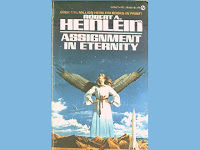
I’ve been listening to Heinlein, after reading his bio (And, heavens, the juvenile I’d never read: The Rolling Stones – could be my family talking. No, I’m serious. Scary that. Smaller cast of characters, same repartee) and I find that of course a lot of his experiences made it into the book. Dabs of this, bits of that, scenes recorded indelibly in the node of memory.
 We will do that, of course, all of us. How not? They are the things that make us, that compose the personality bit by bit, at the almost molecular level. More than that, we will use the feeling of being there. The fear before engaging in battle. The first time you realized someone was trying to kill you. The first time you faced the possibility someone might kill you but here you would stand and here you would face what might come. The fear from which courage is forged. And more than that – the pity you felt for the first time; the first time you fell in love; your first kiss.
All of these will come back to you when you write – when your character is in the same situation.
But what about the situations you’ve never faced? Above I described the first time you realized someone was trying to kill you. Yep, it’s an experience in my bank of memory (No, nothing paranoid. Someone was shooting at a crowd from an upper floor window. I was in the crowd. Not THAT exciting.) As is the experience of having a weapon pointed at me and choosing not to back down because backing down would have started a rout and increased the chances the weapon would be shot.
I have those experiences, but I realize they’re not common. And what if your character needs it? And what if my character needs experiences I’ve never had? Because characters do, from time to time. Dyce is divorced, with a son. Clearly I’ve never experienced that. Clearly I’ve never been a man, much less a young man who turns into a dragon. Clearly I’ve never faced a lion. And clearly my son has never been an alley cat addicted to beer.
Shouldn’t you write what you know? Of course you should. And the good writers, Pratchett and Heinlein come to mind, know humanity. They know how to untangle the skein of thread that binds us all. They know the truth beneath the passing situations. They have the first sight and the second thoughts.
Those are needed, see. The first sight reveals things as they are meant to appear. The second thoughts reveal things as they are.
Most writers – most of those slogging in the trenches, aspiring to greatness – can do this in varying degrees.
There are two “degrees” that annoy me to the point of rambling incoherence (Yes, like this.) One is the type where the writer chooses not to write anything he doesn’t “Know”. This is usually interpreted as anything he hasn’t lived through and it produces pathetic, over precious, involuted works of quotidian life. Very fine if that’s what you like. It is not my cup of tea. It is not even the foam on my cappuccino. Alternately, there are the people who interpret this as being “Write about what you’ve read about.” The problem is when they’re writing about a gender, an orientation, a class of people, a profession, a political assembly that they don’t belong to/despise/don’t care for, it tends to come across as second hand knowledge, about as flavorful and memorable as sawdust crackers. For examples refer to the vast sea of what I call pseudo redneck sf. You have the uneducated/laborer/artisan as a voice character, but the author never met anyone without three graduate degrees. So the character comes across as either stupid or sluggish or despicable or all three.
Are some people in those groups all three? Oh, undoubtedly. Though to be truly nefarious you need to sharpen those qualities through the application of exquisite education. Trust me. I’m one of them with graduate degrees and worse I run in their circles. But your average laborer is no more likely to be stupid than your average professor. For a given kind of stupidity, they might be less. Less bookish, sure. Less educated, sure. Simple? Moronic? No.
And this is where the first sight and the second thoughts come in handy. I’ve spent any amount of time lurking in public places – and not just university bars – listening to people. In fact, at any party, any diner, any restaurant, any public garden, any sports event, I divide in two. There’s the Sarah that takes part, and the Sarah that listens. And then... there’s the Sarah that thinks. “What would I be like if....”
Am I very good at this? Well, I’m neither Pratchett nor Heinlein, nor even Freer (who has a more varied life experience than most of us) but I try really hard. And if I fall short in how I handle someone, I hope I fail on the side of respect. I.e., I would rather treat my character who isn’t like me with more respect than disdain.
I’m not talking about villains here. We all know about rounding your villains. We’re talking about secondary or even main characters who are utterly different from you.
What would I like you to do? Identify a type/gender/profession of character you’ve never written. Tell me about it in the comments. Try to imagine what you would be like as that person, assuming you have the same intelligence and faculties, just a different starting point. Then go do some rudimentary research and try to write it.
Alternately and as well, feel free to rant about how this is often violated, just use no names or book titles, because I already have enough enemies; or to talk about someone who did this wonderfully. I’ve named my contenders above.
What do these things have to do with one another?
In reading the last one in the saga of Tiffany Aching, I was reminded of the fact that witches don’t have the second sight. They have the first sight and the second thoughts.
I suspected the first time I came across that sentence that for witches you should read writers. Perhaps that’s just my personal deformation, of course. I can find myself reading a book on macrame and stop and view something as a profound image on writing technique.
That is neither here nor there. Whether Pratchett meant it as a metaphor for the writer or not, it reminded me also of the first time I saw him. It was World Fantasy or World Con (Yeah, I’m that sharp) in 2000 and it took place during the meet and greet (aka swill and mill – which leads me to believe it was WF as Worldcon is too big for such niceties.) There was this huge, garrulous crowd of people. And standing by the wall, looking out with intent eyes was... Terry Pratchett. It took me a moment to believe it was him. I’d been reading him for five years, and I didn’t realize he was JUST starting to take off in the US. (Heck, that same con, when asked for an example of a non-monarchic system in a fantasy I said “Terry Pratchett’s city-state ruled by Patricians and guilds” and the panelists said “Terry who?” Also, they booked his reading in one of the smallest rooms. There were people standing and sitting in every inch available. I was kneeling at the back, and someone was standing over me. I.e. He had fans, but the powers that be didn’t KNOW that.) Being me, and born, congenitally without shame, I then approached him, introduced myself and told him about the shrine to him in my office, next to the writing desk, and the goats I sacrificed daily to his picture, shame about the carpet. He took it in stride, and didn’t seem to think I was a total lunatic, at least considering he initiated a conversation with me later.
When I think of the first sight and the second thoughts, I think of him standing there, evaluating everyone, listening, trying to get inside people’s minds.
I’ve been listening to Heinlein, after reading his bio (And, heavens, the juvenile I’d never read: The Rolling Stones – could be my family talking. No, I’m serious. Scary that. Smaller cast of characters, same repartee) and I find that of course a lot of his experiences made it into the book. Dabs of this, bits of that, scenes recorded indelibly in the node of memory.
We will do that, of course, all of us. How not? They are the things that make us, that compose the personality bit by bit, at the almost molecular level. More than that, we will use the feeling of being there. The fear before engaging in battle. The first time you realized someone was trying to kill you. The first time you faced the possibility someone might kill you but here you would stand and here you would face what might come. The fear from which courage is forged. And more than that – the pity you felt for the first time; the first time you fell in love; your first kiss.All of these will come back to you when you write – when your character is in the same situation.
But what about the situations you’ve never faced? Above I described the first time you realized someone was trying to kill you. Yep, it’s an experience in my bank of memory (No, nothing paranoid. Someone was shooting at a crowd from an upper floor window. I was in the crowd. Not THAT exciting.) As is the experience of having a weapon pointed at me and choosing not to back down because backing down would have started a rout and increased the chances the weapon would be shot.
I have those experiences, but I realize they’re not common. And what if your character needs it? And what if my character needs experiences I’ve never had? Because characters do, from time to time. Dyce is divorced, with a son. Clearly I’ve never experienced that. Clearly I’ve never been a man, much less a young man who turns into a dragon. Clearly I’ve never faced a lion. And clearly my son has never been an alley cat addicted to beer.
Shouldn’t you write what you know? Of course you should. And the good writers, Pratchett and Heinlein come to mind, know humanity. They know how to untangle the skein of thread that binds us all. They know the truth beneath the passing situations. They have the first sight and the second thoughts.
Those are needed, see. The first sight reveals things as they are meant to appear. The second thoughts reveal things as they are.
Most writers – most of those slogging in the trenches, aspiring to greatness – can do this in varying degrees.
There are two “degrees” that annoy me to the point of rambling incoherence (Yes, like this.) One is the type where the writer chooses not to write anything he doesn’t “Know”. This is usually interpreted as anything he hasn’t lived through and it produces pathetic, over precious, involuted works of quotidian life. Very fine if that’s what you like. It is not my cup of tea. It is not even the foam on my cappuccino. Alternately, there are the people who interpret this as being “Write about what you’ve read about.” The problem is when they’re writing about a gender, an orientation, a class of people, a profession, a political assembly that they don’t belong to/despise/don’t care for, it tends to come across as second hand knowledge, about as flavorful and memorable as sawdust crackers. For examples refer to the vast sea of what I call pseudo redneck sf. You have the uneducated/laborer/artisan as a voice character, but the author never met anyone without three graduate degrees. So the character comes across as either stupid or sluggish or despicable or all three.
Are some people in those groups all three? Oh, undoubtedly. Though to be truly nefarious you need to sharpen those qualities through the application of exquisite education. Trust me. I’m one of them with graduate degrees and worse I run in their circles. But your average laborer is no more likely to be stupid than your average professor. For a given kind of stupidity, they might be less. Less bookish, sure. Less educated, sure. Simple? Moronic? No.
And this is where the first sight and the second thoughts come in handy. I’ve spent any amount of time lurking in public places – and not just university bars – listening to people. In fact, at any party, any diner, any restaurant, any public garden, any sports event, I divide in two. There’s the Sarah that takes part, and the Sarah that listens. And then... there’s the Sarah that thinks. “What would I be like if....”
Am I very good at this? Well, I’m neither Pratchett nor Heinlein, nor even Freer (who has a more varied life experience than most of us) but I try really hard. And if I fall short in how I handle someone, I hope I fail on the side of respect. I.e., I would rather treat my character who isn’t like me with more respect than disdain.
I’m not talking about villains here. We all know about rounding your villains. We’re talking about secondary or even main characters who are utterly different from you.
What would I like you to do? Identify a type/gender/profession of character you’ve never written. Tell me about it in the comments. Try to imagine what you would be like as that person, assuming you have the same intelligence and faculties, just a different starting point. Then go do some rudimentary research and try to write it.
Alternately and as well, feel free to rant about how this is often violated, just use no names or book titles, because I already have enough enemies; or to talk about someone who did this wonderfully. I’ve named my contenders above.
Tuesday, October 5, 2010
Running on the spot

I feel like I'm running on the spot to stop myself going backwards.
Here I am working another 5 day 12 hour week to get through marking assignments and delivering lectures. Last week end I almost had the first book of the new fantasy trilogy finished. But now I won't get back to it until after next weekend. (I'm a guest at Conquest over the weekend). And in the meantime I'm mulling over ideas for the next King Rolen's Kin trilogy.
What I'd really like is uninterrupted time to write. (See picture) No stress, no pressure. Yet, according to Andrea Kuszewski over at IEET, stress can help trigger creativity. (See the article here)
'When placed in a situation where innovation was necessary, Ernesto said, “People think beyond the normal capabilities of an object, and try to surpass the limitations it imposes upon itself.” In this way, he describes their behavior as Technological Disobedience, or breaking all rules in which that product’s technology was intended (rule-breaking, like I’ve said before, is one of the hallmark traits of creativity).'
So I hope, as my deadline looms closer, while the bathrooms and kitchens get pulled apart and rebuilt around me, and I continue to lecture and mark assignments in a college that teaches an accelerated curriculum, that some of this 'creativity under stress' rubs off on me.
When it all gets too much, I imagine running away to place with a view of the ocean and a room where I can sit with my computer. I make a cup of tea and shut the door on the world and disappear into my head to write. My husband and family are there in the next room. I can go out and join them any time I like. But they don't interrupt me to tell me the cat threw up on the couch again. They just clean it up themselves. Ahhhh, heaven!
What is your 'happy place' that you imagine when things get too much? For me it involves writing. I can't imagine living without writing.
Monday, October 4, 2010
Neither a jot nor a tittle
It is TOO a real word. It's a small mark used in printing. I looked it up. And now I will have to spend days clearing my mind of the mental image of a gnome (called Mark) of course, being used as a lead-type corrector. I need a new mind. It started with a typo. I wanted to talk about something I find incredibly difficult and even worse than artwork to get any two people to agree on - ergo, the title.
After all, a book sells -- let's face it, on its cover. Well, it gets picked out - especially if you're a new author with no push - on the SPINE - which is, duh, the title and your name. If your name is Fenella Von Plugelflueglepestenschatz-Borbratzenfond (or, at least something long) choose a short title, because the publisher is going to have to use a rather small font (as on the the three name bearing Heirs of Alexandria books).
So to run the book buyer gauntlet in order (assuming spine out display and an author without much of a following, or a newbie) titles become the first hurdle. Then cover, then blurb, then first page. And then possibly last page!
If you fall at the first hurdle, you're out of the race.
So it is very important.
Now let's make this clear: I am a dreadful advisor on this, unless it is as case of ‘Bad example'
I've chosen precisely none of my titles.

THE FORLORN - would have been MORNINGSTAR
 A MANKIND WITCH would have been - Gah. Can't remember. Memorable title, obviously.

DRAGON'S RING (a title which still makes this new Australian ex-South African embarrassed) SKEIN OF DRAGONS
Eric chooses all the Heirs' ones out of Shakespeare
Jim Baen decided on RATS BATS AND VATS. It didn't really work for me as it sounded like an anthology - but if that's what your publisher wants...

The Karres books are all logical follow ons from Witches of Karres.
PYRAMID SCHEME I may have had a hand in. Like SLOW TRAIN TO ARCTURUS I was there when it was born.

But generally, Eric, or O'Mike , or Misty or Jim have all said: ‘good idea, the title sucks', in varying degrees of politeness. But by now I believe I can't really name a book well.
I've had a little more joy with being allowed to name Short Stories.
THE WAR, ME, 17 MILLION DOLLARS AND A STRIPPER
remains a favorite of mine. I could never resist reading a book called that. Could you? I mean how could you not want to know?
THE HUMAN CONQUEST OF A GALACTIC EMPIRE :
IT'S A DIRTY JOB, BUT SOMEONE'S GOTTA DO IT
PART 1 : NEITHER SLEET, NOR SNOW, NOR ALIEN MONSTERS...
Is maybe a little long for your average spine - But NEITHER SLEET, NOR SNOW, NOR ALIEN MONSTERS...
Works for me.
THE POET GNAWREATE AND THE TAXMAN - I always thought a better title than the story...
And of course there is THE GOTH SEX-KITTEN ... (forthcoming from NR:-))
Anyway. What makes a good title? I obviously don't know - so why don't you tell me? Would you have bought any of those?
What titles have you seen that jumped out at you?
How do you work out what to call a story?
After all, a book sells -- let's face it, on its cover. Well, it gets picked out - especially if you're a new author with no push - on the SPINE - which is, duh, the title and your name. If your name is Fenella Von Plugelflueglepestenschatz-Borbratzenfond (or, at least something long) choose a short title, because the publisher is going to have to use a rather small font (as on the the three name bearing Heirs of Alexandria books).
So to run the book buyer gauntlet in order (assuming spine out display and an author without much of a following, or a newbie) titles become the first hurdle. Then cover, then blurb, then first page. And then possibly last page!
If you fall at the first hurdle, you're out of the race.
So it is very important.
Now let's make this clear: I am a dreadful advisor on this, unless it is as case of ‘Bad example'
I've chosen precisely none of my titles.

THE FORLORN - would have been MORNINGSTAR
 A MANKIND WITCH would have been - Gah. Can't remember. Memorable title, obviously.
DRAGON'S RING (a title which still makes this new Australian ex-South African embarrassed) SKEIN OF DRAGONS
Eric chooses all the Heirs' ones out of Shakespeare
Jim Baen decided on RATS BATS AND VATS. It didn't really work for me as it sounded like an anthology - but if that's what your publisher wants...

The Karres books are all logical follow ons from Witches of Karres.
PYRAMID SCHEME I may have had a hand in. Like SLOW TRAIN TO ARCTURUS I was there when it was born.

But generally, Eric, or O'Mike , or Misty or Jim have all said: ‘good idea, the title sucks', in varying degrees of politeness. But by now I believe I can't really name a book well.
I've had a little more joy with being allowed to name Short Stories.
THE WAR, ME, 17 MILLION DOLLARS AND A STRIPPER
remains a favorite of mine. I could never resist reading a book called that. Could you? I mean how could you not want to know?
THE HUMAN CONQUEST OF A GALACTIC EMPIRE :
IT'S A DIRTY JOB, BUT SOMEONE'S GOTTA DO IT
PART 1 : NEITHER SLEET, NOR SNOW, NOR ALIEN MONSTERS...
Is maybe a little long for your average spine - But NEITHER SLEET, NOR SNOW, NOR ALIEN MONSTERS...
Works for me.
THE POET GNAWREATE AND THE TAXMAN - I always thought a better title than the story...
And of course there is THE GOTH SEX-KITTEN ... (forthcoming from NR:-))
Anyway. What makes a good title? I obviously don't know - so why don't you tell me? Would you have bought any of those?
What titles have you seen that jumped out at you?
How do you work out what to call a story?
Sunday, October 3, 2010
Beginnings
 Every story or book has one. Whether your novel is plot driven or character driven, you have to start somewhere. It doesn't matter if, as Ann Patchett suggests, you begin writing at the beginning and finish at the end, or if you write a collection of scenes and then order them in a manner that best suits your story and style. At some point in the process, you have to write that first sentence, first paragraph, first page. And, like it or not, that "first" is your first impression on the reader and, if it doesn't grab them, there's a pretty good chance they won't read any further.
We've all heard about the hook. We have to hook the reader, make them want to turn the page. We have to hook the editor or agent we're submitting to so they'll read more than our first couple of paragraphs. Every time I hear this, I picture myself sitting in a boat, fishing rod in hand, patiently waiting for a nibble at the hook playing along the bottom of the lake, muscles itching to set the hook and reel in the elusive cold water agent/editor/reader. The only problem is, I'm neither patient nor a good angler. Besides, cleaning that sort of catch would be really icky. (Okay, not enough coffee this morning means creepy imagery.)
So, as a writer, I've been aware of the need to find the perfect "hook" for my work. But as an editor, it's something new. I understand now why slush readers -- yes, Matapam, I'm talking abut you ;-p -- say they have to be hooked within a couple of pages of a novel or a couple of paragraphs of a short story. There simply isn't enough time in the day to read everything otherwise. Does that mean some good stories or novels might be rejected? Absolutely. But it is, unfortunately, a way of life. It is also a symptom of what's going on these days. Readers, on the whole, simply don't have the attention span or patience to wade through pages and chapters of what might be beautiful prose before they get to the plot hook. That's one of the reasons "literary" works don't sell as well as genre. There are others, but I'm not going to get into them.
What started me thinking about this was a round of editing yesterday, of my own work as well as submissions to Naked Reader, and then this article. American Book Review has published the "100 Best First Lines from Novels". I read through them, recognizing most of them as books I've read -- or tried to read. Some of the lines are so stuffed with description and various dependent and independent clauses as to make my eyes cross. Others are short and not so sweet. Some make me smile and others leave me scratching my head. But some grab me and make me want to read more.
42. Dr. Weiss, at forty, knew that her life had been ruined by literature. —Anita Brookner, The Debut (1981) -- There were days in college English classes when I knew exactly what Ms. Brookner meant when she wrote this line. Reading it now, I can imagine so many scenarios this line could lead into, each of them more fantastic than the one before it.
49. It was the day my grandmother exploded. —Iain M. Banks, The Crow Road (1992) -- WHAT? Grandma exploded?!? Now tell me you don't want to read what comes next.
100. The cold passed reluctantly from the earth, and the retiring fogs revealed an army stretched out on the hills, resting. —Stephen Crane, The Red Badge of Courage (1895) -- While this doesn't cause that instant "WHAT?!?" the previous line did, it does leave me asking questions and wanting to know what army and why they are there. Are they resting after a march or resting before battle? Again, something that has me wanting more information.
8. It was a bright cold day in April, and the clocks were striking thirteen. —George Orwell, 1984 (1949) -- Thirteen? That alone tells me there is something different to this world and I'll read on to find out what.
These aren't all the good ones on the list. Most of them are, in my opinion, excellent. Sure, there are some I don't think should be on the list and some that should be that aren't. What I'd like you to do is look at the list and then think about your favorite books, preferably books published in the last decade or two. How did they start? Did the book start with a bang or a whimper? If a whimper, why did you keep reading and would you keep reading today if you'd never read the book before?
If you want, you can post your first sentence. One sentence only. We'll let you know if it hooks enough to have us wanting more.
Saturday, October 2, 2010
Publishing in Slippers
Greetings from New Zealand to the Naked Readers.
To write is to change, and to effect change — as long as we’re following some necessity of our own in what we write. For me, the process has been one of serious at-home introversion (entering the imagination and spending long days alone writing it out) followed, then accompanied, by relentlessly evolving extroversion (being published; speaking about the process to ten, fifty, or 400 people; travelling; living with international writers; collaborating; working for a publisher . . .)
Then late last year, in keeping with the global financial scene and the state of crisis in the established publishing industry, I lost my two-day-a-week job and was forced to find another way to fund myself — one more in keeping with this new(ish) webbed-up world we inhabit — and to make another stretch out into the community. Besides that, my latest novel, born into the dark night of the abovementioned crisis, seemed to be drifting into obscurity.
I knew what I’d do. I’d woken one night 18 months earlier and the concept was slid deftly into my keeping, if you will. Now it was time to start seriously incubating it. Digital publishing is not a wildly pioneering idea. It’s been around for a while, piecemeal, but I seemed to be alone here in NZ, with the plan to do what conventional publishers always wanted to do (but got sidetracked from by financial necessity): publish work I love. Beautifully written books whose content is dynamic, truth-telling, and heartening. Work that lights me up no matter how many times I work through it with the author, assessing, discussing structure, close editing, proof-reading, having a cover designed, signaling its glories . . .
Rosa Mira Books goes live later this month. The first novel, The Glass Harmonica: A Sensualist’s Tale, by Utah author Dorothee Kocks, will be out in November, followed by an anthology of Slightly Peculiar Love Stories, by New Zealand and international writers.
What an age we live in, where a woman can start a publishing business at her kitchen table. She can roam about the world in her bedroom slippers, finding colleagues and allies and answers to her myriad questions. She can find designers and marketers, writers and readers, a deeply satisfying job, and sometimes even joy.
I came upon the Naked Reader by the usual ‘you need to check out this’ from a friend. It’s great to find others running parallel along the writing-publishing track, and I’ve admired the energy and generosity of the writers on the Mad Genius Club blog, which seems to be mysteriously linked with this one.
I wish us all the best, we who are having so much fun doing exactly what we want and are best fitted for.
www.penelopetodd.co.nz
www.rosamirabooks.blogspot.com
(Edit: I've fixed the links - I'm not sure why they went wrong)
To write is to change, and to effect change — as long as we’re following some necessity of our own in what we write. For me, the process has been one of serious at-home introversion (entering the imagination and spending long days alone writing it out) followed, then accompanied, by relentlessly evolving extroversion (being published; speaking about the process to ten, fifty, or 400 people; travelling; living with international writers; collaborating; working for a publisher . . .)
Then late last year, in keeping with the global financial scene and the state of crisis in the established publishing industry, I lost my two-day-a-week job and was forced to find another way to fund myself — one more in keeping with this new(ish) webbed-up world we inhabit — and to make another stretch out into the community. Besides that, my latest novel, born into the dark night of the abovementioned crisis, seemed to be drifting into obscurity.
I knew what I’d do. I’d woken one night 18 months earlier and the concept was slid deftly into my keeping, if you will. Now it was time to start seriously incubating it. Digital publishing is not a wildly pioneering idea. It’s been around for a while, piecemeal, but I seemed to be alone here in NZ, with the plan to do what conventional publishers always wanted to do (but got sidetracked from by financial necessity): publish work I love. Beautifully written books whose content is dynamic, truth-telling, and heartening. Work that lights me up no matter how many times I work through it with the author, assessing, discussing structure, close editing, proof-reading, having a cover designed, signaling its glories . . .
Rosa Mira Books goes live later this month. The first novel, The Glass Harmonica: A Sensualist’s Tale, by Utah author Dorothee Kocks, will be out in November, followed by an anthology of Slightly Peculiar Love Stories, by New Zealand and international writers.
What an age we live in, where a woman can start a publishing business at her kitchen table. She can roam about the world in her bedroom slippers, finding colleagues and allies and answers to her myriad questions. She can find designers and marketers, writers and readers, a deeply satisfying job, and sometimes even joy.
I came upon the Naked Reader by the usual ‘you need to check out this’ from a friend. It’s great to find others running parallel along the writing-publishing track, and I’ve admired the energy and generosity of the writers on the Mad Genius Club blog, which seems to be mysteriously linked with this one.
I wish us all the best, we who are having so much fun doing exactly what we want and are best fitted for.
www.penelopetodd.co.nz
www.rosamirabooks.blogspot.com
(Edit: I've fixed the links - I'm not sure why they went wrong)
Friday, October 1, 2010
Nature & Inspiration (Holy Cow)
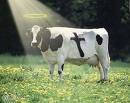 No, this is not a post about St Moo, the little known Irish cow-saint of county Limerick. Although her life's journey from tragic poddy calf to hard working inspiration of working class Irish cows is now part of Paddy folklore (her case for Mooification is currently before the Vatican).
Writers often mention various sources of inspiration for fiction. They might visit art galleries and get inspired by great works of art. Perhaps they listen to music to get into the right mood for their next scene.
I love nature and being outside. I find it a real tonic for my spirit and a way of letting my mind slow down.
A lot of genre fiction contains a strong element of natural setting. Fantasy fiction in particular often relies on the trek through the forest, or might feature the loner in his cabin in a remote mountain hideaway. Think of John Flanagan's Ranger's Apprentice (which is YA). Descriptions of nature - the trees and forests - and the various animals are critical to his work.
Even though being in contact with nature indirectly helps my writing by allowing me to balance my oft over-heated psyche, it doesn't necessarily directly inspire me (although it has inspired some scenes & I love to write descriptions of things I have seen while travelling, including natural wonders).
It just had me curious. Are any of the writers out there directly inspired to write by natural settings? If so, is there a market for waterproof laptops?
Subscribe to:
Posts (Atom)

 Posts
Posts

